
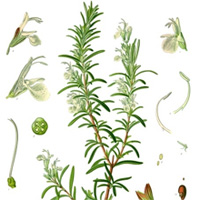
 A chemical that occurs naturally in the common herb rosemary has been found to protect the eye from macular degeneration and other eye diseases. This study, published in Investigative Ophthalmology and Visual Science, is one of many recent investigations into the anti-inflammatory and antioxidant effects of the active ingredients in medicinal herbs. The compound in Rosemary is called “carnosic acid.”
Rosemary is a savory herb that adds flavor to a variety of recipes, including chicken, barbeques, salad dressing and tomato dishes. A member of the mint family, it is native to the Mediterranean region. Rosemarinus officinalis has evergreen, needle-like, fragrant leaves and tiny colorful flowers. It is a common decorative plant in gardens.
Researchers at Sanford-Burnham Medical Research Institute looked at the effect of carnosic acid on both living cells and animals. They introduced hydrogen peroxide, an oxidant, into cells in the laboratory. This step was meant to mimic the oxidization that is theorized to be a major factor in retinitis pigmentosa, macular degeneration and other eye diseases. Then they subjected the cells to carnosic acid and noticed the cells produced antioxidant enzymes. These enzymes helped protect the cells from oxidization.The researchers then tested the effect of carnosic acid on animals. They gave their study group of rodents carnosic acid and then attempted to damage their photoreceptors using light. These rodents’ eyes were protected from damage, and tests indicated they had better electroretinogram activity. However, rodents who did not receive the carnosic acid were damaged.
The most common eye disease in the United States is age-related macular degeneration. The macula, or yellow part at the back of the eye, gradually breaks down. The causes of this disease are not firmly established, but free radical damage is suspected to play a major role. Macular degeneration is especially common in older individuals, which may come from a cumulative lifetime of free radical damage, along with poorer circulation resulting in less oxygen and nutrients getting to the eyes, as well as reduced absorption of nutrients as one ages.
Note: A diet rich in fresh fruits and minimally-processed vegetables, fish, lean protein and whole grains provides an automatic hedge against many types of diseases. Fruits and vegetables have significant nutritive value and free radical fighting benefits, to help support both eye and whole body health. If enough nutrients cannot be obtained through the diet, or absorption is poor, then nutritional supplementation may be needed.
Study: Protective effect of carnosic acid, a pro-electrophilic compound, in models of oxidative stress and light-induced retinal degeneration. Rezaie T et. al. (2012) Investigative ophthalmology & visual science Nov 27;53(12):7847-54. doi: 10.1167/iovs.12-10793
