
 Two men blinded by retinitis pigmentosa have had their sight partially restored by receiving electronic retinal implants at King’s College Hospital in England.
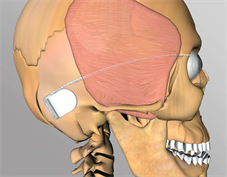
The surgery involves implanting a 3×3 mm2 microchip with 1,500 electrodes below the retina. A thin cable is run to a special sub-dermal control unit that is implanted behind the ear. When light reaches the eye, pixels in the chip are stimulated, sending electronic signals to the optic nerve and then to the brain. An external power unit can be connected to the chip using a magnetic disk implanted on the scalp. This allows the chip’s sensitivity to be altered.
Clinical trials began more than 6 years ago. The technology is improving over time, with the more recent patients reporting better visual acuity.
Neither patient had vision prior to the surgery. Immediately afterwards, they were able to detect light as soon as the retinal implant a microchip was turned on. The patients can locate white objects on a dark background. It is expected that the patients’ vision will continue to improve as they adjust to the microchip. Ten other patients will participate in this promising trial.Retinitis Pigmentosa (pigmentosis) is a progressive, degenerative disease of the retina that can seriously blind a patient. The disease seems to have several genetic components and tends to run in families. Its is relatively rare, affecting one in 3700 individuals.
Symptoms of Retinitis Pigmentosa typically include decreased peripheral and night vision — usually in youth — that gets progressively worse over time. Diagnosis includes an eye exam and an ERG (electroretinogram). It is considered to be an incurable condition, and research is underway to find effective treatments.
One of the doctors, Professor Robert MacLaren, said, “It’s the first time that British patients who were completely blind have been able to see something. In previous studies of restorative vision involving stem cells and other treatments, patients always had some residual sight. Here the patients had no light perception at all but the implant reactivated their retina after more than a decade.”
Natural approaches to managing the effects of Retinitis Pigmentosa have been researched. The progression of the illness seems to be delayed using proper vitamin A supplementation, possibly postponing blindness for ten years. Supplementing with nutrients such omega-3 fatty acid, vitamins E, C, lutein, DHA, & alpha lipoic acid, according to other studies, may help preserve vision.
Studies:
King’s College Hospital part of UK trial of Retinal Implant
Studies On Retinitis Pigmentosa
