
Healthy Eating Habits
Stevia is a Safer Sweetener
Effects of Stevia on People with Diabetes
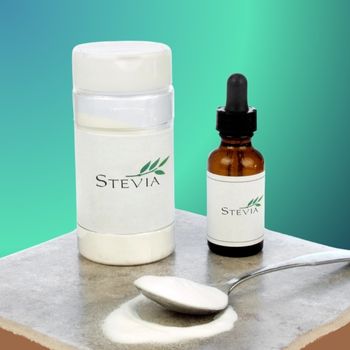
Studies indicate that stevia sweeteners contain no calories or carbohydrates. Stevia does not impact blood sugar or insulin levels.2 As a result, people with diabetes can enjoy more food options while still following a healthy eating plan.3
In another study, stevia was found to reduce glucagon levels after meals.4 Glucagon regulates glucose levels and drops when blood glucose climbs.
Blood Pressure and Stevia
A 2003 study found that stevia may help lower blood pressure, possibly due to its cardiotonic properties, which support healthy blood pressure and heart rhythm.5 However, more recent research has shown mixed results, with some studies finding no significant effect. More research is needed to determine whether stevia truly benefits blood pressure.
Weight Control
Added sugars make up about 16% of the average American’s daily calories, which is linked to weight gain and poor blood sugar control. Using stevia as a sugar substitute can help lower calorie intake while still allowing you to enjoy sweet flavors as part of a balanced diet.
Safety
Early concerns suggested that stevia might be harmful to the kidneys. However, more recent research—including studies on rodents—indicates that stevia supplements could actually help protect kidney health and lessen the effects of diabetes. One study even found that stevia may significantly improve certain biochemical markers in people with chronic kidney disease (CKD).6
Safety studies marked stevia extract as free of side effects.7
Current research also suggests that it is safe to consume the recommended amount of this sugar substitute or less while pregnant.8 Confer with your pediatrician about this.
Some stevia products include sugar alcohols, which can cause bloating, stomach cramps, nausea, or diarrhea in people who are sensitive to them. If you have a sensitivity, look for stevia products that don’t contain sugar alcohols—just check the label before purchasing.
Current research shows that highly purified stevia is safe to consume when used in moderation. Most people can enjoy stevia without worrying about side effects.
Stevia Side Effects: What the Research Shows
Over the years, some studies have raised concerns about potential side effects of stevia, but most of this research was conducted on animals. Many of these findings have since been challenged or disproven, and current evidence suggests that stevia is safe for human consumption when used appropriately.
Who Should Avoid Stevia?
Certain people should be cautious with stevia. Because stevia can lower blood sugar and blood pressure, or act as a diuretic, it may not be suitable for everyone. People taking medications for diabetes, high blood pressure, or those on diuretics should talk to their doctor before using stevia, as it may interact with these treatments.9
Even if you choose not to use stevia, try using honey, date sugar, monk fruit, agave, molasses, coconut, erythritol, xylitol, and/or maple syrup. In moderate amounts, they offer a much healthier alternative to foods containing any chemical artificial sweeteners, corn syrup, fructose, or sucrose.
Monk Fruit Extract
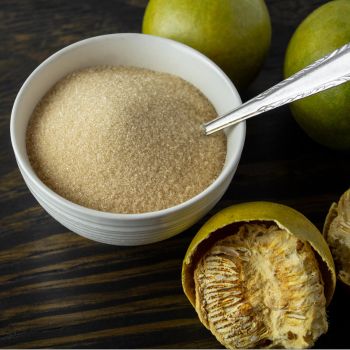
Monk fruit extract is a zero-calorie sweetener with a low glycemic index, making it a good option for those watching their blood sugar. It is rich in antioxidants, particularly mogrosides, which may help reduce inflammation10 11 and have anti-cancer properties.
Monk fruit is widely considered safe and has not been linked to any negative side effects. The FDA has classified it as generally recognized as safe (GRAS) for everyone, including pregnant women and children.
When buying monk fruit extract, be sure to read the ingredient label, as some products contain added ingredients or fillers.
Erythritol
Erythritol is a sugar alcohol that occurs naturally in some fruits, but the kind sold in stores is typically produced through an industrial process. It does not raise blood sugar, insulin, cholesterol, or triglyceride levels.12 13 Erythritol – new lab study suggests that erythritol could damage cells lining the brain blood vessels. It may increase the risk of strokes, though more research needs to be done to confirm this.14 However, consuming large amounts—especially alongside other sugars like fructose—can lead to digestive issues such as gas and diarrhea.
Xylitol
Xylitol is a sugar alcohol that tastes about as sweet as regular sugar. It is known for supporting dental health by lowering the risk of cavities and tooth decay.15 Some animal studies also suggest it may boost bone density, potentially helping to prevent osteoporosis.16 Like other sugar alcohols, consuming too much xylitol can cause digestive issues such as gas and diarrhea.17 If you plan on feeding your dog peanut butter or any food that might contain xylitol, check the label. Xylitol is highly toxic to dogs.18
Learn more about our healthy diet recommendations.
- Cancer Discov (2025). https://doi.org/10.1158/2159-8290.CD-25-0247 ↩
- Stephen D. Anton, Corby K. Martin, Hongmei Han, Sandra Coulon, William T. Cefalu, Paula Geiselman, Donald A. Williamson. Effects of stevia, aspartame, and sucrose on food intake, satiety, and postprandial glucose and insulin levels, Appetite, Volume 55, Issue 1, 2010, Pages 37-43, ISSN 0195-6663 ↩
- https://www.sciencedirect.com/science/article/abs/pii/S0195666310000826 ↩
- https://www.medicalnewstoday.com/articles/323627 ↩
- Ming-Hsiung Hsieh, Paul Chan, Yuh-Mou Sue, Ju-Chi Liu, Toong Hua Liang, Tsuei-Yuen Huang, Brian Tomlinson, Moses Sing Sum Chow, Pai-Feng Kao, Yi-Jen Chen. Efficacy and tolerability of oral stevioside in patients with mild essential hypertension: A two-year, randomized, placebo-controlled study. Clinical Therapeutics, Volume 25, Issue 11, 2003, Pages 2797-2808, ISSN 0149-2918, https://doi.org/10.1016/S0149-2918(03)80334-X. ↩
- Contemp Clin Trials Commun. 2018 Aug 21;12:17–25. doi: 10.1016/j.conctc.2018.08.007 ↩
- Appetite. Author manuscript; available in PMC: 2010 Aug 1. ↩
- PMCID: PMC4229159 PMID: 25392440 ↩
- https://www.medicalnewstoday.com/articles/319837#who-should-not-use-stevia ↩
- Acta Biochim Biophys Sin (Shanghai). 2019 Apr 1;51(4):365-374. doi: 10.1093/abbs/gmz014. ↩
- Diabetes Metab Syndr Obes. 2020 Oct 20;13:3821–3830. doi: 10.2147/DMSO.S276184 ↩
- Appl Microbiol Biotechnol. 2017 Dec 1;102(2):587–595. doi: 10.1007/s00253-017-8654-1 ↩
- https://pmc.ncbi.nlm.nih.gov/articles/PMC4995183/ ↩
- Auburn Berry, Samuel Ruzzene, Joao Izaias, Joshua Holzer, Madeleine Stone, Nathalie Orozco-Fersiva, Whitney Valenti, Jared Greiner, Vinicius Pacheco Garcia, and Christopher DeSouza. Erythritol Increases Oxidative Stress and Reduces Nitric Oxide Production in Human Cerebral Microvascular Endothelial Cells. Endothelial cell biology in health and disease, 12 May 2025. https://doi.org/10.1152/physiol.2025.40.S1.1054 ↩
- J Nat Sci Biol Med. 2017 Jan-Jun;8(1):16–21. doi: 10.4103/0976-9668.198344 ↩
- Nutrients. 2019 Aug 6;11(8):1813. doi: 10.3390/nu11081813 ↩
- https://pmc.ncbi.nlm.nih.gov/articles/PMC5093271/ ↩
- Vet Clin North Am Small Anim Pract. 2018 Nov;48(6):985-990. doi: 10.1016/j.cvsm.2018.06.004. Epub 2018 Jul 29. ↩
