
 Middle-aged people and seniors are far more likely to develop Macular Degeneration, glaucoma, cataracts and diabetic retinopathy than those in their youth. It is true that some eye diseases strike the young. These tend to be genetically-based diseases, and they are rare. The incidence of eye diseases in the United States goes up dramatically with age:
Read More »
 Research is pointing toward a link between myopia and the brain chemical dopamine. All-natural sunlight may be the antidote.
Myopia is called “near sightedness” because the eyeball is too long. The image from the lens falls short of the retina, causing blurring of distance vision. The condition is corrected using glasses or contact lenses. It is on the rise all over the world. In the United States, incidence has risen from 25% to 50%
Read More »
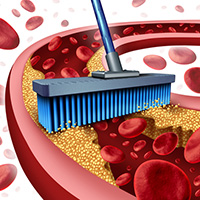 Some patients with dry Age-Related Macular Degeneration (ARMD) have vision improvements after taking high doses a statin. The common cholesterol-lowering drug is called Atorvastatin. It is the statin drug used in a phase I/II clinical trial at Massachusetts Eye and Ear at Harvard Medical School and the University of Crete. A higher-than-normal dose of the drug caused lipid deposits behind the retina to dissolve in some patients.
Statin drugs are FDA approved for controlling blood
Read More »
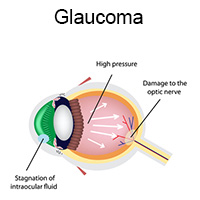 A new “smart” contact lens has been shown to detect accurately intraocular pressure in glaucoma patients. This technology may be useful for predicting which patients are deteriorating rapidly. Their treatment plan can be modified accordingly to help preserve more vision.
This study used the Sensimed Triggerfish® contact lens system. Columbia University Medical Center researchers found that specific electrical signals from the “smart” contact lenses correlated with the rate of the disease’s
Read More »
Eye disease and aging generally go hand-in-hand. That means that more people are likely to need surgery for cataracts, but that also means that those same patients are likely to suffer from other conditions like macular degeneration, glaucoma, and diabetic retinopathy. According to the OSN Supersite, this changes the ways that doctors counsel their patients and how they proceed with treatment plans, especially in relation to cataract surgery.
Some sources say that the risk of AMD decreases after one undergoes cataract surgery, but no conclusive scientific studies on the topic have yet been published.
Read More »
 Retinal Vein Occlusion is the blockage of veins that drain blood from the retina in the eye. The eye circulatory system depends on releasing blood back to the heart after it has nourished the retina. When the vein is blocked, hemorrhaging occurs, damaging the retina. It is typically caused by atherosclerosis, a common condition especially in older people that damages the arteries. “Occlusion” means the blockage or closing of a blood vessel.
 Researchers at Oregon State University found a link between chronic inflammation, immune dysfunction and zinc deficiency. 1 Inflammation is involved in cardiovascular disease and other diseases.
They introduced an inflammation-provoking substance to a human white blood cell culture. This resulted in an increase in the responses of the cytokines interleukin
Read More »
 A long-term study of patients receiving gene therapy shows positive results.1 Researcher Dr. Robert Maclaren published a letter in the New England Journal of Medicine indicating that 5 out of the 6 patients with a rare genetic eye disease either improved or stayed the same after treatment. This may lead to approval of gene therapy for Choroideremia. This type of research may ultimately result in the approval of gene therapy for other more common eye diseases.
Men with Choroideremia have a defective
Read More »
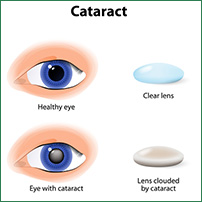 A large study has found no association between prior cataracts surgery and the development of Age-Related Macular Degeneration (ARMD).1 This study supports the long-term safety and low possibility of side-effects from replacing a cataract-damaged lens with an artificial lens.
Both cataracts and ARMD are eye diseases associated with ageing. By the age of 75, 50% of Americans have cataracts.2 It affects 24+ million Americans over age 39. Advanced Age-Related Macular Degeneration affects 1-in-10 eighty-year-olds; 9+ million Americans age 50 and up have the disease in early or late stages.
Read More »
 Aflibercept is currently a treatment for wet Age-Related Macular Degeneration (AMD), but it may also prove useful for patients with dry AMD.
The researchers accidentally discovered that an anti-placental growth factor antibody could provide retinal protection for the dry form of Macular Degeneration. They tried using a known protein called placental growth factor (PlGF) on a simulation of wet AMD in animal tissues. The PIGF made the retinal cells worse. So, they tried an anti-PlGF antibody treatment. This treatment provided protection against retinal damage.
Aflibercept is an anti-PlGF antibody treatment. It is used
Read More »
Natural Eye Care, Inc.
3 Paradies Lane
New Paltz, New York 12561
Phone: 845.475.4158

NaturalEyeCare™ started in 1999 to help the public and professionals learn about complementary care in eye disease treatment.
The information and recommendations we offer are based on over 30 years of peer review research and personal clinical experience which guides us in providing a valuable resource to our readers, customers and patients regarding maintaining healthy vision naturally.
We believe that vision health is intimately connected to overall mental, physical and spiritual health. Therefore we encourage people to look at their overall lifestyle and diet as part of keeping healthy vision and reducing the risk of eye disease onset. This includes diet, regular exercise, and management of daily stress. If one has health issues such as high blood pressure, a thyroid imbalance, any autoimmune disease and/or are on medication(s), these possible contributions to eye disease should considered when working with your health care professional.
Please do not hesitate to call us at 845.475.4158 with any questions and concerns.