
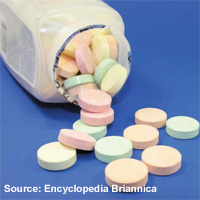
 Age-related macular degeneration (AMD) has been linked to supplementing more than 800 mg of calcium per day. The link was strongest in the elderly, who suffer from AMD the most. The research was a cross-sectional study of National Health and Nutrition Examination Survey (NHANES) data. The RDA for calcium (CA) for adults is 1,000 mg; 1200 mg for women over 50. However, changes to the recommended total daily intake of CA have not been suggested.
This research was conducted at the University of California, SF, and appeared in JAMA Ophthalmology April 2015. It was based on surveys of calcium supplementation and AMD. In the past, the researchers had a similar finding with
Read More »
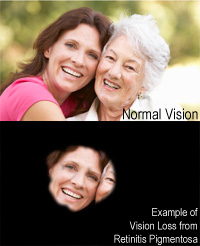 Retinitis pigmentosa (RP) is an eye disease that can cause serious vision loss, and it is usually inherited. Its symptoms can begin at any age and include reduced peripheral vision (tunnel vision), night blindness, difficulty adapting to changes in light levels, and eventually, blindness. RP is a type of retinal dystrophy that results in progressive degeneration of rod photoreceptor cells. While this disease is degenerative, much can be done to reduce or delay its effects.
Any changes in vision should be reported to an eye doctor immediately. Initially, RP patients may notice gradual changes in peripheral vision — the vision to the sides, top and bottom of the field of vision. Any symptoms
Read More »
 Medical marijuana, or cannabis, is being legalized in more and more American states. For more than 40 years, the effect of medical marijuana on glaucoma has been studied. As cannabis becomes more accessible — and legal — glaucoma patients are becoming more interested in how this drug could help with their condition.
Medical marijuana has been shown in studies to decrease intraocular pressure (IOP) in glaucoma patients. The National Eye Institute found that although medical marijuana lowered IOP after taking the drug, the pressure is decreased for only 3 to 4 hours. This is considered
Read More »
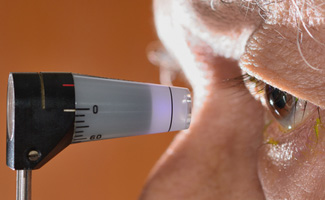 Several different types of glaucoma are the leading cause of blindness in the US1, and yet many cases of glaucoma begin without symptoms. Half of the 3 million-plus Americans who have glaucoma have been diagnosed.2 Glaucoma can affect anyone, but it is especially prevalent in persons over age 60. Everyone should have regular eye exams throughout their lives to screen for glaucoma, especially a dilated eye exam. Glaucoma tends to run in families, but anyone can get it.
Read More »
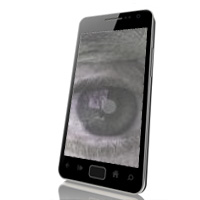 People in developing countries can face huge hurdles getting cataracts correctly diagnosed and treated. A new smartphone app called “Vula” helps diagnose cataracts using a photograph. A routine and very short cataract surgery can then be scheduled. This app is helping overcome barriers to treating this very common source of vision impairment and blindness.
Cataracts are a film that form on the lens of the
Read More »
 With cataracts affecting nearly 22 million Americans, it’s not surprising that most of us know people who have had cataract surgery. We may even be contemplating cataract surgery for ourselves. Since cataracts are almost never a medical emergency, you should feel entirely comfortable taking the time to learn more about cataracts and explore all your options.
What is a Cataract?
A cataract is simply a spot on the lens of the eye that you cannot readily see through. These spots are made up of clumps of normal eye protein and generally form slowly over time. Although most cataracts are related to aging, it is also possible for cataracts
Read More »
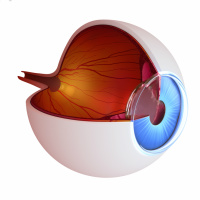 A cutting-edge project has produced a vast “road map” for proteins in the retinal pigment epithelium (RPE) and choroid of the eye. The project, conducted by recent grantees of a BrightFocus grant, mapped the locations and quantities of 4,403 different eye proteins. This research could be invaluable to further understanding of conditions such as age-related macular degeneration (AMD).
Read More »
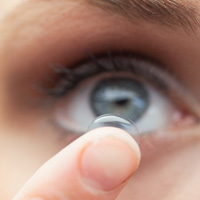 A biodegradable contact lens is being developed that would administer glaucoma medication and then disappear. The problem with eye drops is that they slip out of the eye and much of the medication is lost. This contact lens, designed by Mridula P. Menon in India, uses a nano-carrier loaded with the glaucoma drug acetazolamide that is dissolved in a transparent vinyl polymer.
The resulting lens can be easily inserted into the
Read More »
 In a new article, “Vision & Posture,” Dr. Mark Fillipi, D.C., illuminates the relationship between vision and posture in the body. These two systems develop differently, but they become intricately intertwined as the brain and body advance. Dr. Fillipi unravels this complex relationship to explain why vision and posture depend so strongly on the health and functioning of the eye itself.
In order to receive and interpret light signals as vision, the physical posture is corrected so that the head and eyes can take in visual information. Visual input,
Read More »
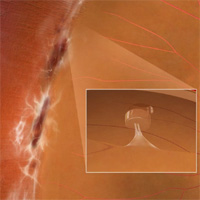 When our far peripheral retina, which is responsible for our extreme side vision, becomes weak and thin, its most common form is called “lattice degeneration.” This condition occurs in 8 to 11 percent of the normal population. It affects both eyes in 30-50% of patients who have the condition.
The fibrosed vessels within the atrophied retina form a “lattice” pattern, hence its name. Sometimes it is accompanied by retinal pigment epithelium (RPE) hyperplasia (an increase in cells), which gives the lesions a pigmented appearance. Some 18 to 42 percent of the
Read More »
Natural Eye Care, Inc.
3 Paradies Lane
New Paltz, New York 12561
Phone: 845.475.4158

NaturalEyeCare™ started in 1999 to help the public and professionals learn about complementary care in eye disease treatment.
The information and recommendations we offer are based on over 30 years of peer review research and personal clinical experience which guides us in providing a valuable resource to our readers, customers and patients regarding maintaining healthy vision naturally.
We believe that vision health is intimately connected to overall mental, physical and spiritual health. Therefore we encourage people to look at their overall lifestyle and diet as part of keeping healthy vision and reducing the risk of eye disease onset. This includes diet, regular exercise, and management of daily stress. If one has health issues such as high blood pressure, a thyroid imbalance, any autoimmune disease and/or are on medication(s), these possible contributions to eye disease should considered when working with your health care professional.
Please do not hesitate to call us at 845.475.4158 with any questions and concerns.