
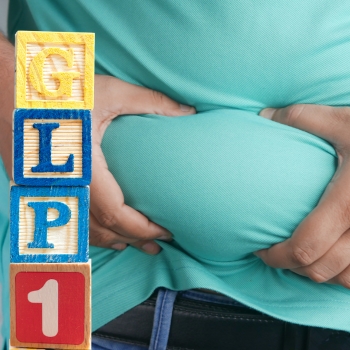
 GLP-1 drugs have produced remarkable weight-loss results for many people, but can these medications have serious side effects? Weight-loss medications containing semaglutide, including Wegovy and Ozempic, reduce appetite through several interconnected systems involving the brain, digestive tract, pancreas, hormones, and nerves. 1
Semaglutide does not appear to cross the blood-brain barrier freely. Instead, it can reach or influence selected appetite-regulating areas, including regions of the hypothalamus and brainstem. 2 By affecting appetite and food-reward signaling, the medication can help you feel satisfied with less food and may reduce cravings and eating motivated primarily by pleasure rather than hunger. 3
Recent laboratory research has also identified a pathway involving the hindbrain and GLP-1 receptor-expressing neurons in the central amygdala. In animal experiments, this pathway reduced the consumption of highly palatable foods by altering dopamine release in the nucleus accumbens, an important part of the brain’s reward system. 4 5 These findings may help explain why some people report less interest in sweets and high-fat foods. However, this detailed brain-circuit research is still developing, and findings from animals do not always apply directly to people.
Positive Benefits of GLP-1 Drugs
Ozempic and similar weight-loss drugs are linked to a 30% lower breast cancer risk. 6
Lowered risk of obesity-related diseases. People who lost significant weight while taking Ozempic, Wegovy, Mounjaro, or Saxenda had sharply lower risks of major obesity-related health problems, including sleep apnea and kidney disease. Those who gained weight on these drugs instead faced higher risks. They were especially susceptible to heart failure, even though many patients discontinued the medications within a year. 7
Early evidence indicates these medications may have neuroprotective and anti-inflammatory properties. Ongoing clinical investigations are looking into whether they can help reduce brain inflammation or delay cognitive decline in conditions like Alzheimer’s Disease.
Related to Alzheimer’s Disease, test tube and animal studies indicated that GLP-1 drugs reduced brain levels of beta-amyloid and tau. In Alzheimer’s Disease, beta-amyloid clumps together to form hard plaques in the brain. 8
Negative Side Effects
Side effects can include: nausea, constipation, and substantial muscle loss. Ozempic and Mounjaro are associated with a risk of hair loss. A large study suggests that GLP-1 drugs including Ozempic and Mounjaro may slightly increase the risk of hair loss in people with type 2 diabetes as well. Compared with two other common classes of diabetes medications, GLP-1 users had a significantly higher rate of alopecia (medical term for hair loss), though the absolute risk was still low. The hair loss was mainly non-scarring, which means it may be reversible. 9
Weight loss drugs, particularly GLP-1s like semaglutide (Wegovy, Ozempic) and tirzepatide (Zepbound, Mounjaro), have been linked to potential eye conditions.
Worsening Diabetic Retinopathy
Rapid changes in blood sugar can worsen existing eye damage in people with diabetes. 10
Macular Degeneration
Some research suggests prolonged use may be associated with a higher risk of developing neovascular age-related macular degeneration. 11
Temporary Blurred Vision
Adjusting to new blood sugar levels can change the shape of the eye’s lens, which may cause blurred vision that generally resolves within 3 to 4 months. 12
Eye doctors recommend a baseline dilated eye exam before or shortly after starting these medications, and annual follow-ups thereafter. Anyone taking these drugs who experiences sudden vision loss, a central visual smudge, or decreased color vibrancy should contact a healthcare provider immediately.
The weight loss benefits appear likely to continue as long as patients remain on the treatment. 13
Caution: While the positive results appear impressive, researchers note that most trials were funded by drugmakers and that long-term safety data remain limited.
Herbs That Reduce Appetite
Natural appetite suppressant herbs include fenugreek, gymnema sylvestre, and caralluma fimbriata. These plants may help reduce hunger and cravings by slowing digestion or affecting fullness hormones. 14
- Fenugreek: A legume seed high in soluble fiber that slows stomach emptying to promote a sense of fullness.
- Green Tea Extract: Contains caffeine and catechins (like EGCG) that slightly boost metabolism and support satiety.
- Yerba Mate: A South American herbal drink containing caffeine and polyphenols that help trigger fullness signals
- Gymnema sylvestre: An Ayurvedic vine that blocks sweet taste receptors on the tongue, which can lower sugar cravings.
- Caralluma fimbriata: An edible cactus extract used traditionally to reduce hunger and decrease calorie intake.
High Fiber
Fiber helps curb appetite by increasing satiety, signaling the brain to regulate hunger.
A high-fiber diet helps maintain hormones that balance feelings of hunger and fullness. Fiber is thought to promote satiety by slowing stomach emptying.
Examples of high-fiber foods include:
- Vegetables like green peas, broccoli, Brussels sprouts, and Swiss chard
- Whole grains such as barley, bran, and oats
- Raspberries, apples, prunes, and other fruits
- Whole grain pasta
- Nuts and seeds, such as chia seeds, almonds, and sunflower seeds
- Legumes, including lentils, black beans, garbanzo beans, kidney beans, and split peas
Adults should aim for daily fiber intake: 25g for women and 38g for men; over 50, women need 21g and men 30g.
Given that seniors have lower calorie needs and tend to cook for 1 or 2 people, getting enough fiber can be difficult. Therefore, a daily fiber supplement helps you stay on top of your fiber intake. Psyllium husk is an excellent choice and the main ingredient in Metamucil.
Healthy Fats
Like fiber, fats take longer to digest than some other nutrients, which may help you feel full longer and reduce the urge to snack between meals.
Healthy fats also stimulate the production of satiety hormones in the gut, which may help to control your overall calorie intake. 15
Examples of healthy fats include avocados, seeds such as pumpkin, sesame, sunflower, and flax, olives, and nut butters. Plant oils, such as olive, peanut, safflower, sesame, and canola oils, and fatty fish, including salmon, mackerel, herring, tuna, and trout. Make sure that vegetable oils are in dark bottles and are first cold-pressed. Only cook in vegetable oils at very low heat. Olive oil is better. Saturated fats, such as coconut oil and butter, are the best for frying; they tolerate high heat. However, if you have high cholesterol, speak with your doctor or nutritionist about how much saturated fat is safe for you.
Vitamins, Probiotics and Synbiotics
Calcium and Vitamin D
Vitamin D and calcium are believed to work together to help control appetite. Calcium may help increase the secretion of incretin hormones, which help reduce appetite. 16 Vitamin D helps the body absorb calcium.
Good food sources of calcium: dairy products (yogurt, kefir, milk, cottage cheese), canned sardines and salmon with bones.
Good food sources of Vitamin D: Egg yolks, fatty fish including salmon, tuna and trout, beef liver.
Many people do not get enough vitamin D from food and the sun. Therefore, consider taking a Vitamin D3 supplement. A calcium supplement is also helpful for many seniors.
Probiotics, Prebiotics and Synbiotics
Probiotics are beneficial gut bacteria or yeast. Prebiotics are non-digestible fibers that support the growth of gut microorganisms.
Synbiotics refer to combinations of probiotics and prebiotics. 17 Supplementation with synbiotics has been shown to increase the abundance of beneficial gut bacteria in people who are overweight or obese. 18 Examples include:
- Yogurt with live cultures plus inulin
- Kefir with chicory-root fiber
- Bifidobacterium plus galactooligosaccharides (GOS)
- Lactobacillus plus fructooligosaccharides (FOS)
- Probiotic supplements combined with resistant starch 19
A natural food pairing could be plain yogurt with bananas, oats, or berries.
Examples of synbiotic supplements include combinations such as:
- Lactobacillus acidophilus with inulin
- Bifidobacterium lactis with fructooligosaccharides (FOS)
- Lactobacillus rhamnosus with galactooligosaccharides (GOS)
- Multiple probiotic strains with resistant starch
- Saccharomyces boulardii with prebiotic fiber
On a label, look for both named probiotic strains and a prebiotic ingredient such as inulin, FOS, GOS, resistant starch, or partially hydrolyzed guar gum. 20
Other food and nutrient sources that help reduce appetite: Green tea, coffee, alpha lipoic acid (ALA), conjugated Linoleic Acid (CLA), tyrosine (often found in whey protein), and bitter orange.
Tips for Suppressing Appetite
- Exercise regularly
- Maintain a balanced diet. Eat smaller meals with protein and less carbohydrate
- Drink plenty of fluids. Plain water, perhaps with a little lemon, is a good choice. Avoid soda pop. Water with a splash of fruit juice is better than a tall glass of sugary juice.
- Manage Stress
- Maintain positive social relationships
Possible Supplement Replacement in the Future
Stanford Medicine researchers have discovered a naturally occurring molecule that may suppress appetite and reduce body weight much like Ozempic, but without several of its common side effects. The molecule, called BRP, acts on a more targeted region of the brain involved in hunger and metabolism rather than affecting tissues throughout the body. BRINP2-related peptide, BRP, works through a different but related metabolic pathway and activates a separate group of neurons in the brain. That distinction could make it a more precise tool for controlling appetite and body weight.
BRP works specifically in the hypothalamus, which controls appetite and metabolism. The hypothalamus is a small region deep within the brain that helps regulate hunger, body temperature, hormone activity, and energy use. Because BRP focuses on the hypothalamus, it does not appear to cause many side effects elsewhere in the body.
Suggested Supplements Consider
Dr. Grossman’s Complete Eye Formula 2oz (oral spray)
Dr. Grossman’s Meso Plus Formula with Astaxanthin – 90 vcaps (3-month supply)
Advanced Eye & Vision Support Formula (whole food) 60 vcaps
OmegaGenics™ EPA-DHA 720 Lemon 60 gels
OmegaGenics EPA-DHA 2400 5 fl oz
Glycemic Guard™ (30 day count)
ReVision Formula (wild-crafted herbal formula) 2 oz – based on classic Chinese medicine Liver tonic formula to help support healthy circulation and blood flow throughout the eyes and body.
Dr. Grossman’s Blood Vessel Control Formula 2oz – helps reduce the risk of unwanted blood vessel growth, supports healthy circulation, reduces inflammation, and more.
Dr. Grossman’s Bilberry/Ginkgo Combination 2oz (60ml) – helps support healthy circulation and strengthens blood vessels and capillaries.
Dr. Grossman’s Whole Food Organic Superfood Multi-Vitamin 120 Vcaps – whole food, organic, GMO-free multivitamin.
H2 Elite Molecular Hydrogen 60 tabs
NMN Wonderfeel Capsule 60 vegcaps – helps protect ganglion cells in the retina and optic nerves from damage, reduces inflammation, supports the immune system.
Supplement Packages
AMD Package 1 (3-month supply)
Sugar Balance & Blood Vessel Support Package 1 (1 month)
Brain and Memory Support Package 1
Recommended Books
Natural Eye Care: Your Guide to Healthy Vision and Healing
Natural Parkinson’s Support: Your Guide to Preventing and Managing Parkinson’s
- Zheng Z, Zong Y, Ma Y, et al. Glucagon-like peptide-1 receptor: mechanisms and advances in therapy. Signal Transduction and Targeted Therapy. 2024;9:234. ↩
- He Z, Gao Y, Lieu L, et al. Direct and indirect effects of liraglutide on hypothalamic POMC and NPY/AgRP neurons: implications for energy balance and glucose control. Molecular Metabolism. 2019;28:120-134. ↩
- van Bloemendaal L, Veltman DJ, ten Kulve JS, et al. GLP-1 receptor activation modulates appetite- and reward-related brain areas in humans. Diabetes. 2014;63(12):4186-4196. ↩
- Godschall EN, et al. A brain reward circuit inhibited by next-generation weight-loss drugs. Nature. Published online 2026. ↩
- Russ Bahorsky, “UVA Study Reveals How New Weight-Loss Drugs Reshape the Brain,” University of Virginia Arts & Sciences, May 6, 2026. https://as.virginia.edu/news/uva-study-reveals-how-new-weight-loss-drugs-reshape-brain. ↩
- Elizabeth S. McDonald, Laura B. Gillis, Peter Gabriel, Kham Xapakdy, Anthony Young, Abigail Doucette, Mitchell D. Schnall, John B. Buse, Etta D. Pisano. GLP-1 Agonists Are Associated With a Significant Reduction in Breast Cancer Incidence in Women. JCO Oncology Practice, 2026; DOI: 10.1200/OP-26-00485 ↩
- European Association for the Study of Obesity. “People who lost the most weight on Ozempic saw huge health benefits.” ScienceDaily. ScienceDaily, 19 May 2026. www.sciencedaily.com/releases/2026/05/260518041432.htm. ↩
- ALZinfo.org, “How Weight Loss Drugs May Benefit the Brain,” The Fisher Center for Alzheimer’s Research Foundation, May 6, 2026. https://www.alzinfo.org/articles/treatment/how-weight-loss-drugs-may-benefit-the-brain/) ↩
- Huilin Tang, Bingyu Zhang, Yiwen Lu, Dazheng Zhang, Ruishan Liu, Yuan Lu, George Cotsarelis, David A Asch, Yong Chen. Risk of hair loss associated with glucagon-like peptide-1 receptor agonists in adults with type 2 diabetes: target trial emulation. BMJ, 2026; 394: e100077 DOI: 10.1136/bmj-2026-100077 ↩
- Mount Sinai Today, “How the New Weight-Loss Drugs Might Affect Your Vision,” Mount Sinai Health System, updated September 22, 2025. https://health.mountsinai.org/blog/how-the-new-weight-loss-drugs-might-affect-your-vision/ ↩
- Joseph Rizzo, MD, “Weight Loss Drugs and Blindness: Is There a Link?” Mass General Brigham, September 5, 2025. https://www.massgeneralbrigham.org/en/about/newsroom/articles/ozempic-wegovy-blindness ↩
- Mount Sinai Today, “How the New Weight-Loss Drugs Might Affect Your Vision,” Mount Sinai Health System, updated September 22, 2025. https://health.mountsinai.org/blog/how-the-new-weight-loss-drugs-might-affect-your-vision/ ↩
- Cochrane. “Blockbuster weight loss drugs like Ozempic deliver big results but face big questions.” ScienceDaily. ScienceDaily, 11 February 2026. www.sciencedaily.com/releases/2026/02/260211073033.htm. ↩
- Arlene Semeco, MS, RD, “10 Natural Appetite Suppressants That May Help You Lose Weight,” Healthline, updated January 19, 2026. https://www.healthline.com/nutrition/10-natural-appetite-suppressants ↩
- Maher T, Clegg ME. Dietary lipids with potential to affect satiety: Mechanisms and evidence. Critical Reviews in Food Science and Nutrition. 2019;59(10):1619-1644. doi: 10.1080/10408398.2017.1423277 ↩
- Gonzalez JT, Green BP, Brown MA, Rumbold PL, Turner LA, Stevenson EJ. Calcium ingestion suppresses appetite and produces acute overcompensation of energy intake independent of protein in healthy adults. J Nutr. 2015;145(3):476-82. doi:10.3945/jn.114.205708 ↩
- Ford AC, Quigley EM, Lacy BE, et al. Efficacy of prebiotics, probiotics, and synbiotics in irritable bowel syndrome and chronic idiopathic constipation: Systematic review and meta-analysis. Am J Gastroenterol. 2014;109(10):1547-1562. doi:10.1038/ajg.2014.202 ↩
- Sergeev IN, Aljutaily T, Walton G, Huarte E. Effects of synbiotic supplement on human gut microbiota, body composition and weight loss in obesity. Nutrients. 2020;12(1):222. doi:10.3390/nu12010222 ↩
- Swanson KS, et al. “The International Scientific Association for Probiotics and Prebiotics consensus statement on the definition and scope of synbiotics.” Nature Reviews Gastroenterology & Hepatology. 2020;17:687-701. ↩
- Davani-Davari D, et al. “Prebiotics: Definition, Types, Sources, Mechanisms, and Clinical Applications.” Foods. 2019;8(3):92. ↩
