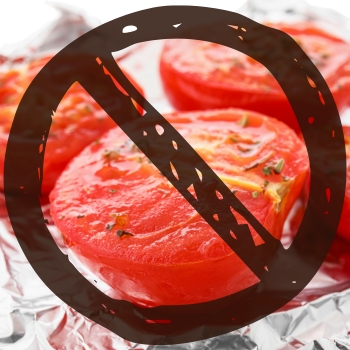
 Healthy cooking can help protect your eyes, brain, heart, and overall wellness. The way you choose, prepare, cook, and store food can affect nutrient levels, toxin exposure, inflammation, blood sugar balance, and long-term disease risk. Simple choices, such as using safer cookware, limiting aluminum exposure, choosing fresh or frozen foods over canned foods, and cooking with healthy oils, can make everyday meals more nourishing.
This article shares practical cooking tips for healthy eating, including how to reduce aluminum exposure, choose safer cookware, prepare vegetables and proteins, support the body’s natural detoxification pathways, and make a nutrient-rich French Peasant Stew. These healthy cooking strategies are especially helpful for people who want to support vision health, reduce oxidative stress, and build better daily habits without making food preparation complicated.
Use Aluminum Foil and Cookware Wisely
Avoid cooking acidic foods in uncoated aluminum pans or wrapped in aluminum foil. The acid causes aluminum to leach into the food. The food may also develop a metallic taste and damage the pans.
A study published in the International Journal of Electrochemical Science in 2012 found that aluminum foil can leach aluminum into food during cooking. 1 Acidic foods that are commonly cooked in aluminum foil include:
- Tomatoes
- Pineapple and other citrus fruits
- Food prepared with spices or wine
- Food prepared with vinegar, such as pickles
Why is Excess Aluminum Dangerous?
The build-up of aluminum in the brain has been identified in a number of studies as being a contributing factor in a higher risk of Alzheimer’s Disease onset. High levels of accumulation can cause brain-related issues, bone disease, and anemia. 2 3
Researchers have discussed a possible connection between aluminum and the development of Alzheimer’s disease for many years. 4 5 Several studies have also reported an association between aluminum in drinking water and Alzheimer’s disease. 6 7
When aluminum loading occurs, aluminum gradually accumulates in human neurons and can lead to the build-up of tau protein, neurofilament protein, and other proteins found in the brains of Alzheimer’s disease patients. 8
Although a recent mega study indicated that aluminum by itself may not be causative, 9 The aluminum build-up, along with other metals and toxins that go into our body, can reach the brain and together be potentially damaging, including cadmium, arsenic, iron, zinc, lead, and mercury, for example.
Elevated levels of metals may induce various detrimental intracellular events, including oxidative stress, mitochondrial dysfunction, DNA fragmentation, protein misfolding, endoplasmic reticulum (a network of tubules in cells) stress, unregulated cell cleansing/removal, and premature cell death. 10
Overdose of aluminum causes oxidative stress in the brain, liver, and kidney, as well as increasing free radical activity and impacting antioxidant enzyme capacity. 11 12
Tips to Reduce Intake of Aluminum
Do not wrap acidic food in aluminum foil and especially do not cook it in foil. If you want to be extra-careful, avoid letting food touch aluminum foil completely.
Reduce your use of canned foods when possible. Canned foods can contribute to low-level exposure to metals, including aluminum. 13 Some cans contain linings made with bisphenol A (BPA), a chemical that can migrate into food. BPA is known to disrupt hormone activity and has been associated with changes in metabolism and weight regulation. 14 Look for BPA-free packaging, and favor fresh and frozen foods over canned.
Use a water filter. Aluminum is frequently used to filter municipal water and often not removed completely.
Avoid baking powder used in cooking and limit antacid tablets that contain aluminum.
Store food in glass containers.
If tests show elevated aluminum in a person, chelation therapy can help remove it and other heavy metals. For optimal treatment, the combination of citric acid (CA) (which decreases oxidative stress and removes aluminum) with HEDTA is used. 15
Cooking Tips for Better Health
Swap heavy fats for olive oil and cooking sprays, and rely on dry-heat methods like baking, broiling, or steaming.
Use a bamboo or metal steamer basket to keep vegetables crisp and nutrient-rich. Poach fish in simmering vegetable broth or lemon juice.
Remove the skin from chicken and turkey, ideally before cooking. Trim visible fat from meats.
Frying in fat adds calories. High-heat frying also accelerates chemical reactions between proteins, fats, and sugars to create advanced glycation end products. Instead, bake, broil, or roast foods on a sheet pan to lock in flavor with minimal added fat. Do not line the sheet pan with aluminum foil, especially if you will use acidic foods, spices, or vinegar.
Replace mayo and sour cream in sauces and dips with blended low-fat cottage cheese or plain Greek yogurt.
Don’t pour oil directly from the bottle. Cook with a measured teaspoon of heart-healthy oils instead, including extra-virgin olive or avocado oil.
Skip processed salad dressings and make your own. Mix olive oil, lemon juice, Dijon mustard, and fresh herbs.
For the safest cookware, look for uncoated stainless steel or cast iron. These materials contain no synthetic chemicals that can flake off or release toxic fumes when overheated. If you prefer a non-stick option, PFAS-free ceramic-coated pans are the best alternative.
Traditional non-stick pans made with Teflon (PTFE) are safe at low-to-medium heats, but if the coating is chipped or overheated, it can release toxic fumes. If you buy pure ceramic, ensure the brand explicitly guarantees their glazes are free of lead and cadmium.
Build a repertoire of dry rubs using spices like cumin, paprika, oregano, and garlic powder rather than relying on high-sodium pre-made mixes.
For extra zest and flavor, squeeze fresh lemon, lime, or a splash of balsamic vinegar to foods.
Healthy Recipe: French Peasant Stew
A simple stew packed with flavor and nutrients. Feel free to vary the vegetables with the season. You can swap red potatoes and bell peppers for the cauliflower, if you like.
Dulse is reddish brown, tasty sea vegetable, high in potassium, phosphorus, iron, Vitamin C, protein and also has Vitamin B 12. Eating dulse as well as other sea vegetables is a great way to get minerals and vitamins.
Serves 4-6
Ingredients
- 1-1/4 cups chickpeas, presoaked overnight
- 3 1/2 cups water
- 4 bay leaves
- 1 strip dulse
- 1 tablespoon extra virgin olive oil
- 6 cloves garlic, sliced
- 1 cup sliced red onion
- 1 ½ cups sliced carrots
- 3 cups cauliflower, cut into bite-sized pieces
- 1 tablespoon dried basil
- 1/2 teaspoon black pepper
- 1/2 teaspoon cardamom
- 1/4 teaspoon dried cloves
- 1/4 teaspoon unrefined sea salt
Directions
- Drain and rinse beans well.
- Bring the beans, water, dulse, and bay leaves to a boil in a 4-quart stockpot. Lower the heat to medium-low, cover, and simmer for about 30 minutes, or until the beans start to soften.
- In a medium skillet, heat the oil; add and sauté garlic, onions, cauliflower, and carrots for 5 minutes, or until brightly colored. Add sautéed vegetables to the beans. Simmer for 15 minutes, or until the beans and vegetables are as tender as you like. Add basil, cardamom, cloves, salt, and pepper.
- Taste and adjust the seasonings, if desired.
- Ladle into bowls and serve.
Juicing is an excellent way to load up on vitamins, minerals, trace minerals, and antioxidants. Click for healthy juicing recipes.
Detoxifying Naturally
The body is naturally designed to remove waste through the liver, kidneys, lungs, digestive system, and skin. You can support these built-in detoxification pathways by drinking enough water, eating fiber-rich foods, including cruciferous vegetables, limiting alcohol and ultra-processed foods, exercising regularly, and getting 7-8 hours of sleep.
Many whole foods may help support the body’s natural detoxification pathways. These include cruciferous vegetables, 16 17 18 berries, 19 soy foods, 20 garlic, onions, 21 22 and spices such as turmeric. 23 24
The following nutrients help support the body’s natural detoxification pathways:
Vitamin C is a powerful antioxidant that helps neutralize free radicals. It also supports the production of glutathione, an important antioxidant used by the liver.
B-Vitamin Complex (B6, B9, and B12): These B vitamins support healthy liver function and cellular methylation, an important process the body uses to process and remove waste.
Vitamin E helps protect cell membranes from oxidative stress and supports liver health.
Glutathione is a master antioxidant that can neutralize the full spectrum of free radicals. Glutathione as a supplement is best taken in intraoral or sublingual form, as it is poorly absorbed in capsule or pill form. Reduced glutathione (GSH) is absorbed better than oxidized glutathione (GSSG). Some formulas also contain nutrients that help the liver produce more glutathione, including cysteine, glycine, and glutamine, as well as selenium, Vitamin C, n-acetyl-cysteine, and alpha-lipoic acid.
Milk Thistle Extract helps detoxify the Liver.
Suggested Supplements Consider
Dr. Grossman’s Complete Eye Formula 2oz (oral spray)
ACG Glutathione EXTRA STRENGTH Spray 2oz.
Dr. Grossman’s Meso Plus Formula with Astaxanthin – 90 vcaps (3-month supply)
Advanced Eye & Vision Support Formula (whole food) 60 vcaps
ReVision Formula (wild-crafted herbal formula) 2 oz – based on classic Chinese medicine Liver tonic formula to help support healthy circulation and blood flow throughout the eyes and body. Also contains milk thistle extract to help with Liver detoxing.
Visual Detox Homeopathic Drops 2oz
Ultimate Body Detox Extra Strength 2oz Bottles
Dr. Grossman’s Blood Vessel Control Formula 2oz – helps reduce the risk of unwanted blood vessel growth, supports healthy circulation, reduces inflammation, and more.
Dr. Grossman’s Bilberry/Ginkgo Combination 2oz (60ml) – helps support healthy circulation and strengthens blood vessels and capillaries.
Dr. Grossman’s Whole Food Organic Superfood Multi-Vitamin 120 Vcaps – whole food, organic, GMO-free multivitamin.
H2 Elite Molecular Hydrogen 60 tabs
NMN Wonderfeel Capsul 60 vegcaps – helps protect ganglion cells in the retina and optic nerves from damage, reduces inflammation, supports the immune system.
Supplement Packages
AMD Package 1 (3-month supply)
Brain and Memory Support Package 1
Anti-Inflammatory Eye and Whole Body Package 1 (1 month supply)
Recommended Books
Natural Eye Care: Your Guide to Healthy Vision and Healing
Natural Parkinson’s Support: Your Guide to Preventing and Managing Parkinson’s
- Bassioni G, Mohammed FS, Al Zubaidy E, Kobrsi I. Risk assessment of using aluminum foil in food preparation. Int J Electrochem Sci. 2012;7(5):4498-4509. ↩
- Agency for Toxic Substances and Disease Registry. Public Health Statement for Aluminum (Internet). Atlanta: Centers for Disease Control and Prevention; (cited 2026 Jul 21). Available from: https://wwwn.cdc.gov/tsp/phs/phs.aspx?phsid=1076&toxid=34 ↩
- Strong MJ, Garruto RM, Joshi JG, Mundy WR, Shafer TJ. Can the mechanisms of aluminum neurotoxicity be integrated into a unified scheme? J Toxicol Environ Health. 1996 Aug 30;48(6):599-613. ↩
- Campbell A. The potential role of aluminium in Alzheimer’s disease. Nephrol Dial Transplant. 2002;17 Suppl 2:17-20. ↩
- Zatta P, Lucchini R, van Rensburg SJ, Taylor A. The role of metals in neurodegenerative processes: aluminum, manganese, and zinc. Brain Res Bull. 2003 Nov 15;62(1):15-28. ↩
- Flaten TP. Aluminium as a risk factor in Alzheimer’s disease, with emphasis on drinking water. Brain Res Bull. 2001 May 15;55(2):187-96. ↩
- Rondeau V, Jacqmin-Gadda H, Commenges D, Helmer C, Dartigues JF. Aluminum and silica in drinking water and the risk of Alzheimer’s disease or cognitive decline: findings from 15-year follow-up of the PAQUID cohort. Am J Epidemiol. 2009 Feb 15;169(4):489-96. ↩
- Walton J. R. An aluminum-based rat model for Alzheimer’s disease exhibits oxidative damage, inhibition of PP2A activity, hyperphosphorylated tau, and granulovacuolar degeneration. Journal of Inorganic Biochemistry. 2007;101(9):1275-1284. doi: 10.1016/j.jinorgbio.2007.06.001 ↩
- Brylinski L, Kostelecka K, Wolinski F, Duda P, Gora J, Granat M, Flieger J, Teresinski G, Buszewicz G, Sitarz R, Baj J. Aluminium in the Human Brain: Routes of Penetration, Toxicity, and Resulting Complications. Int J Mol Sci. 2023 Apr 13;24(8):7228. doi: 10.3390/ijms24087228. PMID: 37108392; PMCID: PMC10139039. ↩
- Wright RO, Baccarelli A. Metals and neurotoxicology. J Nutr. 2007 Dec;137(12):2809-13. ↩
- Barabasz W., Albinska D., Jaskowska M., Lipiec J. Ecotoxicology of aluminium. Polish Journal of Environmental Studies. 2002;11(3):199-204. ↩
- Jaishankar M., Tseten T., Anbalagan N., Mathew B. B., Beeregowda K. N. Toxicity, mechanism and health effects of some heavy metals. Interdisciplinary Toxicology. 2014;7(2):60-72. doi: 10.2478/intox-2014-0009. ↩
- Campdelacreu J. Parkinson disease and Alzheimer disease: environmental risk factors. Neurologia. 2014 Nov-Dec;29(9):541-9. ↩
- Le Corre L, Besnard P, Chagnon MC. BPA, an energy balance disruptor. Crit Rev Food Sci Nutr. 2015;55(6):769-77. ↩
- Domingo J. L. Aluminum and other metals in Alzheimer’s disease: a review of potential therapy with chelating agents. Journal of Alzheimer’s Disease. 2006;10(2-3):331-341. doi: 10.3233/jad-2006-102-315. ↩
- Steinkellner H., Rabot S., Freywald C., et al. Effects of cruciferous vegetables and their constituents on drug metabolizing enzymes involved in the bioactivation of DNA-reactive dietary carcinogens. Mutation Research. 2001;480-481:285-297. doi: 10.1016/s0027-5107(01)00188-9. ↩
- Hakooz N., Hamdan I. Effects of dietary broccoli on human in vivo caffeine metabolism: a pilot study on a group of Jordanian volunteers. Current Drug Metabolism. 2007;8(1):9-15. doi: 10.2174/138920007779315080 ↩
- James D., Devaraj S., Bellur P., Lakkanna S., Vicini J., Boddupalli S. Novel concepts of broccoli sulforaphanes and disease: induction of phase II antioxidant and detoxification enzymes by enhanced-glucoraphanin broccoli. Nutrition Reviews. 2012;70(11):654-665. doi: 10.1111/j.1753-4887.2012.00532.x. ↩
- Aiyer H. S., Gupta R. C. Berries and ellagic acid prevent estrogen-induced mammary tumorigenesis by modulating enzymes of estrogen metabolism. Cancer Prevention Research. 2010;3(6):727-737. doi: 10.1158/1940-6207.CAPR-09-0260 ↩
- Bogacz A, Mikolajczak P. L., Mikolajczak P. L., et al. The influence of soybean extract on the expression level of selected drug transporters, transcription factors and cytochrome P450 genes encoding phase I drug-metabolizing enzymes. Ginekologia Polska. 2014;85(5):348-353. doi: 10.17772/gp/1741 ↩
- Davenport D. M., Wargovich M. J. Modulation of cytochrome P450 enzymes by organosulfur compounds from garlic. Food and Chemical Toxicology. 2005;43(12):1753-1762. doi: 10.1016/j.fct.2005.05.018. ↩
- Lii C. K., Tsai C. W., Wu C. C. Garlic allyl sulfides display differential modulation of rat cytochrome P450 2B1 and the placental form glutathione S-transferase in various organs. Journal of Agricultural and Food Chemistry. 2006;54(14):5191-5196. doi: 10.1021/jf052484u. ↩
- Kaefer C. M., Milner J. A. The role of herbs and spices in cancer prevention. Journal of Nutritional Biochemistry. 2008;19(6):347-361. doi: 10.1016/j.jnutbio.2007.11.003. ↩
- Hsieh Y. W., Huang C. Y., Yang S. Y., et al. Oral intake of curcumin markedly activated CYP 3A4: in vivo and ex-vivo studies. Scientific Reports. 2014;4(article 6587) doi: 10.1038/srep06587 ↩