
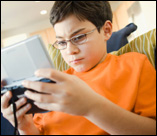
The American Academy of Ophthalmology has published a statement regarding the use of handheld 3-D games by children under age 6.
Nintendo recently started warning parents that young children could compromise their vision if they look at the 3-D games for long periods. The AAO does not seem to think that warning is completely warranted:
Read More »

A new study published in the British Medical Journal makes the case for walking away from diabetes.
The researchers studied nearly 600 adults over 5 years and found that those who took 10,000 steps per day (the equivalent of 5 miles) had much better insulin sensitivity than those who walked less.
Diabetes risk decreases when one’s insulin sensitivity increases.
Source: LA Times article
Read More »
While we often think of iron deficiency as a problem that causes anemia, researchers have found that excessive iron may increase one’s risk of developing Alzheimer’s disease.
Researchers publishing in the Journal of Alzheimer’s Disease state that some studies have found that accumulation of metals in the body, including copper, zinc, and iron, have been linked to the development of neurodegenerative diseases. In particular, this study focuses upon Alzheimer’s and Parkinson’s disease patients who demonstrated high levels of iron in their brains. Source: https://www.foodconsumer.org
Read More »

Myopia (also known as nearsightedness) is becoming increasingly common. In just two decades the proportion of Americans who are nearsighted has increased by 11% to include about 36% of the population.
A new study published in Ophthalmology reveals a possible connection between early life and the development of myopia. Several factors were found to contribute to the development of nearsightedness:
Read More »
Most individuals with undiagnosed glaucoma do not notice any symptoms the condition is somewhat advanced. Technically, glaucoma is due to damage to the optic nerve, sometimes as a result of increased pressure of the aqueous humor – the clear, watery fluid that circulates in the chamber of the eye between the cornea and the lens.
Read More »
Natural Eye Care, Inc.
3 Paradies Lane
New Paltz, New York 12561
Phone: 845.475.4158

NaturalEyeCare™ started in 1999 to help the public and professionals learn about complementary care in eye disease treatment.
The information and recommendations we offer are based on over 30 years of peer review research and personal clinical experience which guides us in providing a valuable resource to our readers, customers and patients regarding maintaining healthy vision naturally.
We believe that vision health is intimately connected to overall mental, physical and spiritual health. Therefore we encourage people to look at their overall lifestyle and diet as part of keeping healthy vision and reducing the risk of eye disease onset. This includes diet, regular exercise, and management of daily stress. If one has health issues such as high blood pressure, a thyroid imbalance, any autoimmune disease and/or are on medication(s), these possible contributions to eye disease should considered when working with your health care professional.
Please do not hesitate to call us at 845.475.4158 with any questions and concerns.